The answer to this question is: Yes and No. If you are talking about food and the price/quality ratio, New York tops Paris. Also, Paris is, for the the most part, a one trick pony. True, many of Paris’ most edgy restaurants and 3 Star Shrines have increased the use of Asian spices and cooking techniques to touch on a type of fusion cuisine; but overall, what you get in the majority of Paris Restaurants is French food. With the exception of Moroccan, other ethnic cuisines are dumbed down to suit conservative Parisian tastes. Compare that to New York which has three distinct Chinatowns each with an enormous amount of eating spots. There are whole neighborhoods in Queens (and in other boroughs) devoted to ethnic dining: Korean, Vietnamese, Indian, Greek, Italian, Mexican, Argentine and Colombian, Russian, Jamaican — and much more. And those are just the outer boroughs. Within Manhattan itself, you are able to go on a veritable world cuisine tour in just a 4 block radius. And, yes, great Jewish pastrami still lives in, alas, fewer and fewer places. Makes Paris seem very provincial. Small town. In addition, New York has steak houses like Peter Luger’s and Spark’s that are true carnivore heavens.
But, Paris still has that indefinable something, Call it charm. Call it elan. Call it sparkle. Whatever. HG is thinking about late night meals at the art deco brasserie Le Vaudeville which seemingly hums with joy and the promise of good times. Brass. Aged, cigarette-smoke stained marble. Perfect lighting. Or, dinner at the brasserie Le Stella on posh Rue Victor Hugo. Low voices. Women who know how to tie scarves. Men in well cut tweeds or blazers. Soaring towers of fruits de mer. Or, the died-and-gone-to-heaven grilled sole drenched in the best butter at Le Dome. Or, the intimacy, warmth and sheer sexiness of many small bistros serving unassuming food. There was a left bank place called Balzar where the clientele and atmosphere were so diverting that the so-so food was forgiven. (Taken over by a chain some years ago, HG does not know if the place still pleases). Other Paris pluses: Steak tartare (always bad in New York); Belon oysters; blood sausage (boudin noir); tete de veau and offal. (An exception: Paris tripe doesn’t compare to New Mexico menudo as served by places like El Parasol near Santa Fe).
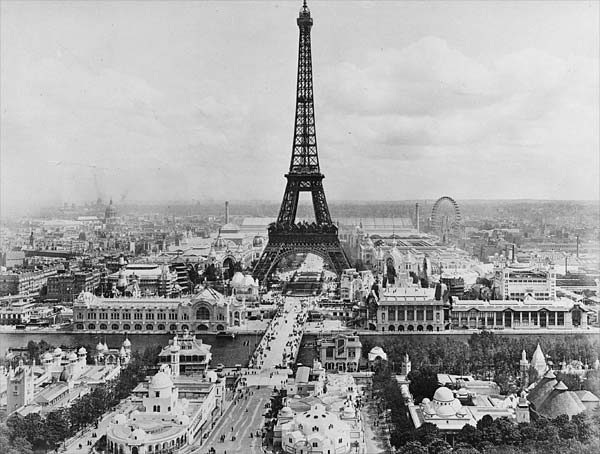
Probably, the most beguiling quality about Paris restaurants is their sheer professionalism. No surprise. The restaurant, as we know it, was invented in Paris. But, if your interest is in variety and getting a dining bang for your buck, New York is incomparable. Yes, “What street compares to Mott Street in July, sweet pushcarts gently gliding by?”. But, an after dinner walk in Paris with the Eiffel Tower sparkling in the distance is nothing to sneer at.
dating sites for loners, is an anthology from the pages of New Yorker Magazine and edited by David Remnick. In HG’s opinion, it is the best food book ever created. There are articles that will make you hungry (A.J. Liebling on the Paris restaurants of his youth; Joseph Mitchell on the old New York steak dinner or “beefsteak”; Joseph Wechsberg on French chef Fernand Point). Some will make you think (Adam Gopnik on French cuisine). Some will make you laugh (Calvin Trillin, Ogden Nash, Steve Martin, Dorothy Parker, Woody Allen and S.J. Perelman). Some may make you weep (Alice McDermott’s bittersweet fiction, “Enough,” on the varieties of appetite and desire). And, there’s one that may make you queasy. HG refers to “A Rat In My Soup” by Peter Hessler. The intrepid author visits Luogang, China, where two restaurants, The Highest Ranking Wild Flavor Restaurant and the New Eight Sceneries Wild Flavor Food City specialize in rat (yes, some tasty cat and snake dishes are also available). Hessler dines on Simmered Mountain Rat With Black Beans and Spicy and Salty Mountain Rat. He discovers, no surprise, that rat really isn’t very tasty. Anyway, “Secret Ingredients” is savory fare, indeed
That’s a question HG often puts to himself. HG is referring to drinking habits in the 50s and for most of the 60s. In those halcyon days, HG lunched daily in Manhattan restaurants with journalists, pals or HG’s public relations clients. Typical lunch at the Blue Ribbon, very good German restaurant on W. 45th (convenient for journalists from Times, Herald-Tribune, Newsweek and Business Week): Two dry martinis with Rollmops Appetizer (Bismarck herring rolled around a dill pickle); steak tartare or bratwurst or Kassler Rippchen (smoked pork chop) washed down with two large, dark beers. Cognac and a cup of black coffee to finish. At Russian Tea Room, HG drank chilled vodka throughout a lunch of Eggplant Oriental, Borscht with Pirozhki (flaky meat pastries) or Siberian Pelmeni (tiny Russian ravioli in a rich chicken consomme infused with generous quantities of chopped dill, sour cream and strong mustard). Wine, of course, accompanied the food at Sardi’s, Four Seasons, Gino’s. Patsy’s, Charles, Christ Cella, etc. But, two martinis always jump started the lunch. After lunch, an energetic HG was back at work. Focused. Productive. HG was not alone. Men (and women) drank cocktails at lunch — Martinis, Manhattans or Whiskey Sours. How could we function with so much lunchtime booze? We did. And, it was fun.
HG was shopping at Whole Foods a few days ago when hunger pangs struck. Big time. Since HG was at the fish counter he rummaged about the adjacent soup bar. HG inspected the New England Clam Chowder. Thought the amount of potatoes overwhelmed the clams. Lobster Bisque. Too much cream. Cioppino. Tired fish in tomato soup. Shrimp and Crab Etouffee. Hmm…This looks promising. Green. Herbaceous. Lots of shredded crab and chunks of shrimp. Evidence of a blond roux and creole spice. Worth a try. HG was blown away. Just a big, tasty portion of N’Awlins right there in the wholly homogenized Whole Foods. If you fancy making some etouffee at home check Paula Deen’s recipe. Buttery Southern soul.
Gone from the streets of the ever more trendy Lower East Side of Manhattan are the choppers. Permit HG to explain. HG does nor refer to people with cleavers. The “ch” in HG’s “choppers” is pronounced with a guttural, Yiddish “ch” as in “challah.” In Yiddish the word chop means “grab.” And, that’s what a chopper did. He grabbed you. When little HG accompanied his father on various Lower East Side errands, choppers were stationed outside of men’s clothing stores on East Broadway and Division Streets. They would grab the arm of HG’s father and try to drag him into a store. Meanwhile they offered a sales pitch in heavily accented English: “Come inside. Bargains. The finest materials. Beautiful suits, coats. Latest styles. Take a look. Prices you won’t believe. No harm in looking.” The chopper had a grip like an iron vise. It took real strength (possessed by HG’s father) to extricate oneself from a dedicated chopper.
All of this took place many, many decades ago in a simpler New York. Now geniuses like Wylie Dufresne turn out imaginative food in chic Lower East Side restaurants. Nary a knish or “chopper’ in sight.
SJ here. Allow me to make a brief interjection. True, the Lower East Side has transformed into a hipster playground of trendy bars, cafes, etc. But, like a ghost sign that bleeds through faded paint jobs, elements of the old Lower East Side are still with us. Orchard Street, while gussied up beyond recognition, still houses of number of old clothing stores and, surprise, surprise, an honest to god chopper. Yes, I was recently stopped in my tracks — the grip was that strong — by a middle aged Hasid who said, “Young man, you look like a fellow who could use a nice suit. We have suits, so good, so cheap, come inside…” A relic of the old days, the chopper still has the stuff…And when it comes to knishes!!! We have the best still in operation!!! Yes Yonah Schimmel Knishes is open right on Houston Street and serving up a delicious Knish — get the Kasha!!!
When BSK was a young actress in New York studying theater with the late greats Lloyd Richards, Lee Strasberg (remember him as Hyman Roth in “Godfather Two”?) and Mike Gazzo (Also in “Godfather Two” as Frank Pentangelli) BSK was particularly adept at “improv” — those acting exercises that are unscripted, spur-of-the-moment improvisations based around general themes or situations. Eventually, BSK left acting behind and had later careers as a photographer, political strategist and government relations expert. Currently, BSK is busily engaged as a potter and painter, turning out extraordinary work in a spacious studio. No matter the career changes, BSK has retained her talent for improvisation. Witness dinner last night. HG and BSK found themselves hungry (surprise, surprise!) and, somehow, the day had gone by with no menu plans and no food shopping. No worries. BSK rummaged in the refrigerator and out came zucchini and some last bits of bacon and pancetta. There was also a heel of goat cheese enriched with jalapeno peppers. Sous chef HG diced garlic. Into a hot pan of olive oil it went with lots of sliced zucchini. BSK sizzled the bacon and pancetta until crisp. Water was put up to boil for pasta (fusili). BSK dashed out to her herb garden for a big bunch of parsley. This was chopped with some kumato (juicy, always ripe brown tomatoes from Mexico). When the zucchini and garlic had softened, the drained pasta went into the pan with the goat cheese (and a bit of pasta water). This created a slightly creamy sauce (with heat from the peppers). BSK stirred in the crispy bacon and pancetta bits. Topped it with the parsley/kumato mix. Green salad and a bottle of Sicilian Nero d’Avolo red wine. Perfect meal. Another starring improv performance from BSK
After HG’s late afternoon exercise ritual of varied stretches and 45 minutes of swimming in the lap pool, HG tries to mitigate the health benefits he has accrued by diving into a large glass of vodka on the rocks. HG is not a believer in the high priced vodkas. Just hype and advertising. However, HG does enhance his proletarian vodka. Sometimes HG adds a dash of Angostura Bitters or Peychaud Bitters or Fee Brothers West Indian Orange Bitters. (A dash of Peychaud also enhances a mediocre brandy). When HG wants a taller beverage, HG mixes vodka with a bit of Campari, Aperol or St. Germain. (HG does not fancy vodka and tonic). Curiously, vodka was never present in the Belorussian/Jewish immigrant home of HG’s youth. Like many Jewish immigrants of the early 1900’s, HG’s Dad fancied rye whiskey, namely Park & Tilford (pronounced “Pok un Tilfeh”), the favorite tipple in Lower East Side bars. When HG was a journalist in the early 1950’s, HG continued the Park & Tilford tradition at the Mirror Bar on New York’s E. 45th Street. Three shots of P & T for one buck. The house bought the fourth. A nice cocktail interlude.
HG has noticed that some serious chefs are playing around with marshmallows, trying to create what could be called, laughingly, “gourmet” marshmallows. A waste of time. HG has always despised these little fluff balls of cloying sweetness. As a lad, HG allowed others to roast marshmallows over night time fires on Rockaway Beach. HG nibbled a Mr. Goodbar.
In a bow to mid-America, HG’s Mom sometimes abandoned East European cuisine and baked mashed sweet potatoes mixed with canned crushed pineapple and topped with marshmallows. Horrible.
The only pleasure HG ever derived from marshmallows occurred, in of all places, a 42nd Street porn shop. HG and his pal, the comedy writer, Peter M.. finished their naughty browse and Peter M. approached the manager. Peter M. looked furtive. In a quavering whisper, laden with perverse guilt, he inquired: “Do you have anything with marshmallows?” The sleazy manager thought for a moment and said: “No.”
Jaime “Jimmy” Rodriguez, Jr. made Puerto Rican food hip, and for a while, made West Fordham Road in The Bronx a dining destination for everyone from President Clinton to Derek Jeter to Fidel Castro. Jimmy’s Bronx Cafe opened in 1993 on the site of a former auto dealership, a short cab ride from Yankee Stadium. It was a smash. Derek Jeter had his birthday party at Jimmy’s and it was a hangout for Yankees and visiting teams. Jimmy hosted a dinner there for Fidel Castro in 1995 (there were 500 in attendance and Jimmy got a lot of criticism from Cuban emigres). Jimmy’s was vast. The food (specially the seafood) was wonderful. Great music (Tito Puente headed one of the bands). Fiery dancing. Everybody cool in the worlds of sports, show biz and politics visited Jimmy’s and Jimmy Rodriguez was honored by New York’s top business and civic organizations.
Jimmy expanded with a branch in Harlem, one on E. 57th Street in Manhattan and a sea food place on City Island in The Bronx. At their height, the Rodriguez restaurants were grossing $10,000,000 a year. The woes of over-expansion soon kicked in however and by 2004 they were all gone.
Bronx born Rodriguez (1963) got his start by joining his father selling seafood from the trunk of their car parked near an entrance to the Major Deegan Expressway. They made a chowder from the leftover seafood, added some Puerto Rican dishes and opened a stand on a Fordham Road corner which was followed by a 50-seat storefront joint, Marisco del Caribe. That operated for about 10 years before the ambitious young man opened Jimmy’s Bronx Cafe.
Well, Jimmy is back. There are four Jimmy’s restaurants now operating in the New York area (or are they?…given Jimmy’s volatility, be wise and call first). The restaurants are the two Don Coqui locations in Astoria and New Rochelle (both run by Jimmy’s daughters, Jaleene and Jewelle); the two Sofritos on E. 57th in Manhattan and in White Plains and Sazon on Reade Street in downtown Manhattan. Creole cooking and Jimmy Rodriguez — Olé!
“Shrimpers and rice are very nice. Hold tight. Hold tight. Hold tight. Hold tight. Foo-doo-racka-sacka. I want some seafood Mama.” Yes, the inimitable Fats Waller sang the great Sidney Bechet masterpiece, “Hold Tight (Want Some Seafaood Mama) with brio. There are plenty of great food related songs because, well food and music go together like chicken and rice.
HG’s late, beloved father had a favorite performer on the Yiddish vaudeville and musical stage: Aaron Lebedoff (sometimes spelled “Lebedeff”). He was famous for his rendition of “Roumania, Roumania.” In this bravura piece, Aaron extolls the virtues of mamaliga (a Roumanian version of polenta), karnezelach (cigar shaped hamburgers containing abundant chopped onion and garlic) and Roumanian wine. The singer describes Roumania as “ah lahnd a zeeseh, ah shayneh” (a sweet and beautiful land). Forgotten is the fact that this “sweet” land was the site of the terrible Kishinev pogroms in which scores of Jews were murdered.
HG has always been bemused by the fact that once Jews arrived in the United States (The Goldeneh Medina) they looked back on the blood soaked Old Country with misty eyed nostalgia. “Odessa Mama,” “Beltz, Mein Shtetele Beltz,” are just two of scores of immigrant songs celebrating various Old County cities and villages. Even HG’s normally clear eyed father could go on at length about the splendor of Odessa ice cream and the physical beauty of the Belarus countryside.
When HG accompanied his father to the Lower East Side to purchase little HG’s winter wardrobe of corduroy knickers and a heavy tweed mackinaw they often lunched at restaurants that advertised “Roumanian Broilings” in Yiddish and English signs. HG was (and is) very fond of the karnezelach and chicken fat fried potatoes he devoured there. Inevitably, the restaurant sound track had Lebedoff singing his signature song. There were many Roumanian restaurants on the Lower East Side. Only the schmaltz soaked Sammy’s survives. You can hear Lebedoff singing “Roumania, Roumania” on YouTube. Helluva performer. Helluva song.