The Thighs Have It

June 26th, 2012 § 1 comment § permalink

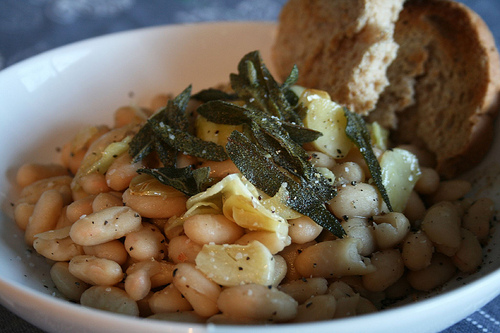
Chicken thighs for dinner. So much better than flavorless chicken breasts (and cheaper). Here’s how HG and BSK do it. Make a marinade of olive oil,lemon juice garlic, ginger, cumin, turmeric, cayenne, coriander. Add a tablespoon or two of Greek yogurt. Mix well. Give it a light dusting of Goya adobo. Marinade in the refrigerator for two or three hours. BSK is going to barbecue and serve with canned white beans (enriched with a garlic and parsley sofrito) plus BSK’s unique mix of zucchini, corn niblets (frozen corn does just fine), New Mexico chile powder and a bunch of fresh herbs from the BSK garden. HG and BSK will eat outdoors on their terrace, sip chilled red wine and watch dusk make beautiful patterns on the surface of Las Barrancas, the colorful bluffs located on Native American lands. Sounds good? It is.

Bloomsday

June 23rd, 2012 § 1 comment § permalink

June 16 was Bloomsday a day of celebration and commemoration of the life of the writer James Joyce and his extraordinary novel, Ulysses. The day refers to the June 16 in the novel. The day in which all of the action takes place during the one day peregrinations throughout Dublin of its Jewish hero (or anti-hero), Leopold Bloom. HG was introduced to the wonders of Joyce in his CCNY college days by Prof. Theodore Goodman, a legendary figure at City College. Goodman taught a course devoted to writing short stories. Students wrote stories. Read them aloud. These were then criticized by Goodman and fellow students. Criticism was withering. To say the least, punches were not pulled. The class text was Joyce’s collection of short stories, Dubliners. The Joyce stories were meticulously analyzed under Goodman’s direction. We leaned there were no accidents in these stories. They were pieces of prose architecture, each word essential in the total framework. It was a humbling experience for embryonic writers. Goodman was elderly and in frail health. Sometimes he missed a class. HG and his mates waited outside the classroom hoping that he would show up. There was a feeling of dread. We loved him, even though he was no Mr. Chips. He was tough and his one-to-one conferences with students could be a scalding experience. Goodman lived through his class with HG and gave HG an “A.” Whenever experience lowers HG’s self esteem, HG remembers that “A.”

In a recent review in The Economist of a Joyce biography by Gordon Bowker, the reviewer noted: “The hero of ‘Ulysses’, Leopold Bloom, was born out of Joyce’s affection and fascination with Jewish culture; which would lead him, in turn, to help several Jewish men and women escape Austria and Germany during the second world war.” It would have been appropriate for HG to celebrate Bloomsday by accompanying a bialy with cream cheese with a glass of Dublin-brewed Guiness Stout. But, in the absence of bialys in New Mexico, HG had to be content in raising a snifter of kosher Slivovitz to the memory of Joyce, a gifted (and difficult) man.

Later this year, during the Christmas season, HG and BSK will watch The Dead, the John Huston cinema version of the longest story in Dubliners. In HG’s opinion, this is the finest cinema version of prose fiction ever achieved.

Treat From Venezia!

June 21st, 2012 § 0 comments § permalink

There’s a dish that HG and BSK often enjoy but never serve to guests. Too ominous. Too scary. HG refers to linguini with sauteed squid in squid ink sauce. Very black. HG and BSK first encountered the dish in Venice many years ago. The Venetians used seppie (tender little cuttlefish plentiful in the Venetian lagoon) and seppie ink. Love at first bite. Here’s the way HG and BSK do it. Saute garlic and shallots in olive oil. Add some cumin, oregano and cayenne plus a bottle of clam broth. Simmer. Add some crushed canned tomatoes and a jolt of tomato paste. Simmer until sauce thickens slightly. You’ve got a nice, seafood based red sauce. Add a packet of squid ink (available online through Amazon.com ). Stir. Magic. You’ve got a jet black sauce. Add to it a pound of cleaned and cut up squid (tubes and tentacles) that you’ve sauteed over high heat for just a few minutes. Toss your cooked linguini in the pan. Mix it all up. Have plenty of napkins available.

Best Ride in Manhattan

June 19th, 2012 § 0 comments § permalink

When HG was a kid it was possible to have a very good time in Manhattan for little or no money. The best of all bargains (a five cent fare) was the Fifth Avenue double decker bus which ended service in 1953. The upper deck (where HG and his late beloved sister, Beulah K., always sat) was a sunny, open space — an absolute panacea to packed urban streets and over-crowded apartments. The Fifth Avenue Bus was an Irish enterprise. The driver and conductor had rich Irish brogues and piously crossed themselves when they motored past St. Patrick’s Cathedral. HG and sister would clamber onto the bus at Ft. Tryon Park at the northern tip of Manhattan (this was preceded by a visit to The Cloisters, the wonderful museum of medieval art in the park). From the the top of the bus, you could take in lovely views of the Hudson River and the New Jersey Palisades. From our Ft. Tyron start, the bus would journey along upper Broadway, east on 110th Street to Fifth Avenue. Ah, upper Fifth Avenue with Central Park on our right and the homes of plutocrats on the left. Then, Tiffany’s and the fashionable shops. On a sunny spring or autumn day there could not be a better trip. Last stop was Washington Square Park with its colorful crowd of Moms, kids, bohemians, eccentrics. A stroll through Greenwich Village to Little Italy and a vast (25 cents) bowl of spaghetti and meatballs in robust red sauce. Hey, you don’t need a million dollars to live like a millionaire. At least, not then.

The Manhattan El

June 18th, 2012 § 0 comments § permalink

Elevated trains still rumble through The Bronx, Brooklyn and Queens. None in Manhattan. This wasn’t the case when little HG was growing up and the ELs (as they were called) ran along Second Avenue, Third Avenue, Sixth Avenue and Ninth Avenue. Noisy. The El made Second Avenue a low end street, furtive with shadows and subway grime. Sixth Avenue was devoted to middle class shopping and the train took you directly to Macy’s on Herald Square. Ninth Avenue was a manufacturing street. Third Avenue was lively. Many restaurants and scores of Irish bars. Loved the various stations on the Third Avenue line with their little cupolas for the change giver (the comedian Jackie Gleason’s mother was one of these ladies) and the pot bellied stoves where you could keep warm while waiting for the train. HG and his late beloved sister, Beulah K., would take the El at Fordham Road in The Bronx (fare was five cents) and take a downtown trip. Exciting. We looked into countless tenement windows (witnessed some entertaining scenes), backyard gardens of brownstones and, best of all, the huge copper pots of the Jacob Ruppert Brewery in the 90’s. We exited at Chatham Square. Chinatown. A big lunch. Wonton soup. Roast pork (or barbecued spare ribs). Shrimp chow mein. Almond cookies. Lots of tea. Lavish lunch for 25 cents. Strolled to Union Square Park on 14th to hear Communists, Anarchists, Socialists, Trotskyites harangue crowds from soapboxes. No Fascists or Capitalists. Free speech, yes. But, there were limits.

Bernard Wolfe

June 15th, 2012 § 2 comments § permalink

Spent a delightful hour chatting on the phone with Miranda Wolfe, daughter of the late Bernard Wolfe, an extraordinary writer who wrote just about everything: novels, short stories, journalism, ghosted Broadway columns, television, screen plays and customized pornography which he produced for one reader — an Oklahoma oil zillionaire (Wolfe was in good company in this customized porn business as the eccentric Oklahoman also hired, amongst others, Henry Miller, Anais Nin and Gene Fowler. What they all had in common was a need for quick cash). Sorry. Don’t want to emphasize the pornography. This was just a miniscule portion of Wolfe’s output (and he found it distasteful). Make haste and read BW’s works.. A good start would be Really The Blues which he wrote with jazz musician Mezz Mezzrow. (This book heavily influenced influenced the Beat Generation of writers — Kerouac, Ginsberg, etc.. For a treat, listen to some of the music forgotten Mezzrow made with Sidney Bechet. Check it here!). The Late Risers defined the cool Broadway hipsters of many decades ago. The Great Prince Died is a historical novel based on the Mexican exile of the great Russian revolutionary and anti-Stalinist, Leon Trotsky. Later, the title was changed to Trotsky Dead. At one time, Wolfe was bodyguard/secretary for Trotsky (he wasn’t present when Trotsky was pickaxed to death by a Stalin assassin).

BW also wrote Limbo, a prescient sci-fi novel.

Wolfe had quiet sartorial elegance and a well stocked mind. Unlike many writers, he excelled at both talking and listening. HG enjoyed some memorable dining with Wolfe. Bernie’s favorite restaurant (and HG’s) was Fornos. a happy Spanish place that flourished on West 52nd Street many years ago (here, BW was formally addressed as “Senor Lupo”). The excellent food was preceded by classic Margaritas and ended with Banana Daquiris. Very hard to leave sober. Bernie liked the Oak Room of the Algonquin hotel where he would compose his meals carefully and creatively after some knowledgeable consultation with the waiter and captain. Alas, the composition of a meal is a skill that has virtually disappeared in New York (but, not in Paris).

In the 50s and early 60s Russian and Iranian caviar was cheap (If you listen closely you may hear the sound of teardrops falling on HG’s keyboard). HG recalls a caviar feast HG (and his ex-wife) hosted at their town house apartment in the Gramercy Park neighborhood. Some two pounds of Beluga (from Caviarteria) were devoured with thin, buttered white toast and washed down with abundant, icy Polish Wyborowa Vodka. In addition to Bernie, the other guests were screenwriter/painter/novelist Fred Segal and his then wife, Sandra. The caviar was followed by cognac and Upmann Brevas cigars, Maduro leaf. Not exactly an homage to healthy living. HG and his ex-wife survive. The others, sadly, are gone. Miranda Wolfe is busy working on Bernie’s voluminous and distinguished literary legacy. Hopefully, many gems will be reissued. Pornography has been described (by the French, of course) as books read with one hand. HG will be reading the reissued Wolfe works with one hand. The other will be clutching a glass of ultra chilled Polish vodka.

When Muffins Met Modernism & A Jewish Bakery Detour

June 13th, 2012 § 0 comments § permalink

In 1930s New York, many apartment buildings, shops (and restaurants) were designed in a streamlined, modernist style — a kind of Art Deco for the masses. While true Art Deco (which reached its height in Paris of the 20s and 30s) was very elegant and seriously luxurious, the young American designers who piggy backed on the Art Deco style were a bit more egalitarian. Their best efforts, in terms of major structures, can be seen in the apartment houses that line the Grand Concourse in the Bronx and the glorious hotels of Miami’s South Beach. Smaller design gems were the chain bakeries that flourished in all of New York’s neighborhoods. The aim of all the “streamlining” was to give shoppers an optimistic lift in the gloom of the Great Depression. The “streamlined” bakeries were Cushman’s and Hanscom’s. The famed industrial designer Raymond M. Loewy designed Cushman’s and Horace Ginsbern designed Hanscom’s. (Ginsbern, then fairly young, later became one of New York’s most prominent apartment house architects. Ginsbern was born in 1893 and died in 1969. Scores of his buildings exist in Manhattan’s Upper East Side).

The architect Robert A.M. Stern has commented on the Loewy and Ginsbern bakery designs: “They brought a relatively high level of International Style Modernism into virtually every New York neighborhood.”

Cushman’s had white porcelain facades; nautical, oval windows and the name was spelled out in a curving, gold script. Hanscom’s had apple green porcelain facades and the name was formed with blocky, super- modern letters. Stern described the entire architectual composition as “Constructivist.”

In the Bronx you had Jewish Bakeries and Italian bakeries. The Jewish bakeries had elaborate butter cream cakes and, of course, bagels, bialys, rye and pumpernickel bread, etc. These were jammed on Sunday mornings with Dads buying bread-stuffs for brunch (The casual tweed and camel hair jackets many of them wore were known as “bagel coats”). The Italian bakeries, in neighborhoods like Belmont, had, of course, sublime bread, delicious cannolis, pignoli cookies and other Italian specialties. There was plenty of cross pollination. Jews liked the corn muffins and cookies at Cushman’s and Hanscom’s (which were generalized as goyish bakeries) and there were plenty of bagel and rye bread fanciers among the non-Jewish population. And, of course, everyone loved their Italian baked goods. Some Jewish bakery survivors in Manhattan are Moishe’s Bakery on 2nd Ave, Streit’s, which bakes and sells matzos, macaroons, kichel and other stuff from a 47,000 foot factory on Rivington Street and Kossar’s which bakes and sells bialys and other traditional good stuff from a location near the Essex Street Market. SJ sent HG a batch of Kossar’s products a few months ago producing moans of delight. The eminent food writer, Mimi Sheraton, a woman who knows Jewish food, says a Kossar’s bialy is the only true bialy baked in the United States. HG agrees.

Interestingly, HG’s Mom never called a bialy by that shortened name. She paid appropriate homage by calling it a Bialyosteker Kuchen.

Smoking Weed and Eating the Sweet Treats!

June 10th, 2012 § 1 comment § permalink

During the 60s (and into the 70s and 80s) HG and BSK were known to puff some mind altering substances. And, this habit led to a desire for sweet baked goods. Fortunately, Manhattan was well supplied with wonderful family owned bakeries (many staffed by European immigrants who brought their pastry skills to the New World). On the West Side was the Eclair Bakery and Cafe on W. 72nd Street and a great bakery (name forgotten) on the southeast corner of Broadway and 79th Street. On the East Side was Mrs. Herbst’s Strudel and Rigo Hungarian. William Greenberg Jr. Desserts was (and remains) on Madison Avenue and purveyed (and still purveys!) sticky buns from heaven. A cheap treat for potheads was the caramel popcorn aptly named Screaming Yellow Zonkers. Screaming Yellow Zonkers were, in fact, one of the first mainstream products that absolutely focused on the Pot Head as consumer and employed psychedelic illustration, absurdist copy and, of course, sweet-salty crunchy goodness to lure Pot Heads. (They succeeded in this endeavor. HG noted, while in the queue at the Ziegfeld Theater to see Stanley Kubrick’s mind bending ” 2001: A Space Odyssey”, that everyone was carrying Screaming Yellow Zonkers or enticing blue and white boxes of Entenmann’s chocolate donuts). Ah, those were sweet times, indeed.

Entenmann’s: The Father of all Temptation

June 10th, 2012 § 3 comments § permalink

HG is a man of iron will: Satan, get thee behind me!! That is the HG motto when temptation tempts. But, when HG is confronted with Entenmann’s Chocolate Donuts in the super market, HG may shake his fist, HG may call upon the gods, but resistance to the Entenmann’s temptation is for naught. Get the point? Yes, HG loves those donuts and in HG’s younger years HG would knock off a box (accompanied by glasses of cold milk) as a bedtime treat. We are in the midst of National Donut Week and Freeman Public Relations (successor to HG’s old firm, now headed by the brilliant Bruce Maguire) is making sure that Entenmann’s is getting the attention it deserves.

Yummy Baked Goods of Yesteryear

June 8th, 2012 § 24 comments § permalink

Sutter’s Bakery. Just say these two words to old New Yorkers and watch their happy faces as they rummage through delicious memories. The Manhattan location of Sutter’s Bakery was at Greenwich Avenue near Sixth Avenue. Next door was the later demolished Women’s House of Detention (Ladies of the night were locked up there and had animated conversations through the bars with their business agents gathered on the sidewalk below). Sutter’s had the best pecan ring, Danish pastries, cookies, croissants, brioche, etc. It was a big place with outstanding variety. (There were equally great Sutter’s on the Grand Concourse in The Bronx and Flatbush Avenue in Brooklyn). HG and BSK recall many happy, Winter Sunday mornings during their early married days. The Sunday Times. Radical radio station WBAI broadcasting subversive joy. Sutter’s gently warmed croissants and brioche. Sweet butter. English marmalade. Steaming mugs of Droste’s cocoa. Snow might have been pelting down W. 67th Street and the wind might have been whistling a frigid tune. But, all was toasty joy in HG and BSK’s rent controlled paradise.