Indian At Home

February 3rd, 2014 § 0 comments § permalink

HG/BSK like to keep their meals simple. Occasionally time is of the essence as well. With that in mind, the duo have devised a very quick Indian dinner. The basis is Seeds of Change curry sauce. Yes, it is a very pretentious name but the ingredients in the jar are pure and savory without the deadly, stale canned taste of many heat-and-eat Indian sauces. So. HG/BSK grill some lightly oiled chicken breasts on a ridged, cast iron pan until they’re just about done. Cut into smaller pieces, the chicken is simmered in the Seeds of Change sauce for about 10 minutes. BSK coats cauliflower florets with garlic infused olive oil, dusts them with cumin and roasts them in a preheated oven. Accompaniments are rice, naan and papadums. HG is a lover of Indian condiments so there are jars of mango chutney, sweet and hot lime pickles plus a bottle of indispensable sriracha to heat things up. Ice cold beer is the appropriate beverage.

When HG/BSK wish to spend more time to preparing an indian feast they automatically think of Vij’s. When HG/BSK had a home in glorious Vancouver, they often had dinner at Vij’s — possibly the best Indian restaurant in the world — and lunched at Vij’s casual eatery, Rangoli. Vij’s is owned and run by Vikram Vij (he’s in front) and his wife, Meeru Dhalwala (she’s in the kitchen). No reservations policy at Vij’s. Opens at 5:30 PM and there’s a line in front. Woosh..and every seat is taken. Get there later than opening and face a one hour (or more) wait at the friendly bar and be fueled by free appetizers. The food? Innovative. Creative. Spectacular. Service is warm and professional. The wine list is exemplary (Vij qualified as a sommelier in Europe). Prices are moderate. Fortunately, Vij and Meeru have written some cookbooks so their dishes can be reproduced at HG/BSK’s New Mexico home. Vij’s: Elegant & Inspired Indian Cuisine is a favorite. So, last night BSK turned to Page 92, “Vij Family’s Chicken Curry.” This is a curry unlike anything served at conventional Indian restaurnts. Layer upon layer of flavors. Not searing hot but tangy. Went beautifully with rice, big bowl of garlicky raita and the aforementioned array of chutneys and Indian pickles. Drank Spanish garnacha (Vij recommends tempranillo). Wonderful meal. Later this week HG/BSK will do some vegetable dishes (eggplant, cauliflower, etc.) from the book. Get a copy and enter the rewarding culinary world of Vij’s.

9781553651840

Superbowl Menu

February 1st, 2014 § 2 comments § permalink

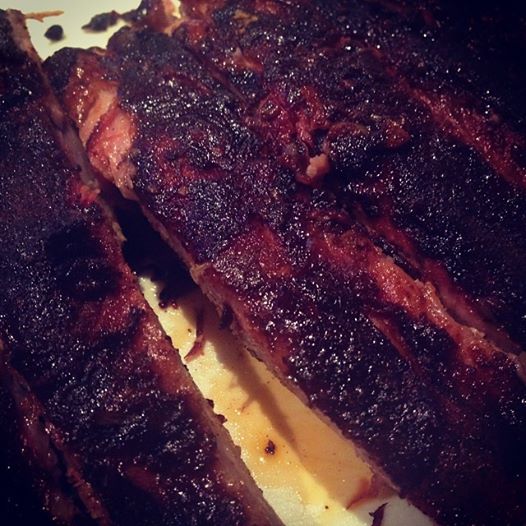
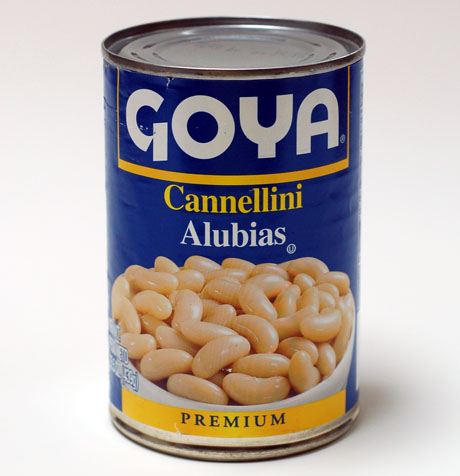
HG will watch the Super Bowl with discerning BSK. The lady knows football having grown up in Ohio where football is a religion. BSK’s first boyfriend (HG is still jealous) was a high school All-American. Given that Super Bowl Sunday is (next to Thanksgiving) the biggest food consumption day in the United States, HG has given the day’s menu some thought. HG’s guide is SJ. Yes, when it comes to barbecue, pork roasts, gumbo and many other hearty culinary items, SJ is the ultimate authority, proof of Brooklyn’s leadership in robust dining. So, following SJ’s lead, HG will be off to the Pojoaque Super Market for a pork butt rimmed with a goodly amount of fat (the fat will baste the roast as it cooks). With a sharp knife, HG will make many small incisions in the butt and fill them with slivers of garlic. Then a rubdown with chile powder, adobo, cumin, smoked paprika, salt, pepper. (HG will add his own touch–a bit of soy sauce mixed with brown sugar). Let that sit in the fridge for the night wrapped in plastic. Then, come Sunday, HG will take the pork butt out, place in a cassarole dish, cover with tin foil and pop it into a 300 degree oven for a bit over four hours (which will hopefully conclude with the end of the game) Sounds good, right? Accompanying the roast will be warm tortillas, canellini beans, chopped raw onions, avocado slices, pico de gallo and an array of salsas (hot and sweet). Giving the meal a gala touch will be BSK’s green chile sauce (thoughtfully preserved in the freezer) plus BSK’s version of Calabacitas (a melange of fried zucchini, peppers, onions and corn). Dessert: Salted Caramel Gelato. During the three hour (or more) game, commercials, half-time extravaganza, learned analysis, HG will be sustained with a bowl of red chile menudo from El Parasol in Pojoaque. Menudo (for the uninitiated) is Mexican tripe stew. The way it is prepared at Jose and Alicia Atencio’s delightful, casual restaurant, it tops tripes a la mode de Caen or any other French or Italian tripe stew. While watching the TV, HG will drink (a modest amount) of tequila with Samuel Adams Ale chasers. BSK will nibble olives, Marcona almonds and Manchego cheese with her white wine. And, who will we root for?. The Broncos. But, because of HG/BSK’s love of the Pacific Northwest, there will be no mourning if Seattle wins. The overall winner, of course, will be HG and BSK’s happy, Southwestern-fed bellies.

Super-Bowl-2014-Prop-Wagers-012714L

Obituaries

January 30th, 2014 § 0 comments § permalink

Every morning, while sipping cafe au lait, HG reads the daily obituaries in the New York Times. It is a habit that smacks of schadenfreude (defined as pleasure in the misfortunes of others). Yes, muses HG while reading of the demise of a distinguished individual: “With all of your honors and renown you are very dead. HG is very much alive.” There is also a sobering thought. As an octogenarian, HG may soon (hey, not too soon) be an obit subject. The star of a recent Times obit page was Martin S. Bergmann, 100, psychoanalyst. Bergmann played the philosopher in Woody Allen’s Crimes and Misdemeanors. The photo illustrating the obit fascinated HG. There was Bergmann, looking glum, seated on a Persian rug clad psychoanalytic couch (obviously a copy of Freud’s lounge). Bergmann’s office, richly wood paneled and containing a big bookcase of reference volumes, had huge windows with spectacular view of Central Park, the Reservoir and the West Side (the twin towers of The Beresford on Central Park West clearly visible). Office had to be on a high floor of a Fifth Avenue building. Very super-prime, super- expensive real estate. So. In order to cover the nut, what was Bergmann charging his analysands? The obit raised another question. Bergmann was raised on an Israeli kibbutz. The kibbutz paid for Bergmann to come to American and study agriculture. Bergmann abandoned agriculture and never returned to Israel. Did he ever pay back the kibbutz? Yes, death raises many questions. HG’s response to death is Italian (HG paraphrases): “Life is short. Brutish. And, it ends in pain. So, in the meanwhile, let’s enjoy a good meal.” With ample wine, adds HG.

36047-600x394

Pete Seeger R.I.P.

January 29th, 2014 § 2 comments § permalink

April 1949. HG was in his third year at the uptown campus of the City College of New York (CCNY). The tuition free college was dubbed “the Harvard of the proletariat.” Tough to get into and an academically rigorous institution, CCNY was noted for producing Nobel Prize winners, scientists (Jonas Salk, conqueror of polio, among them), journalists and left wing activists. That spring some 65 years ago, CCNY was gripped by a student strike, a protest against anti-semitism in the Spanish language department and racial segregation in the college dormitories. The misguided college administration called in the police. With cries of “No cops on campus”, students battled the police. (HG was whacked in the arm with a billy club). Some 16 students were arrested. HG remembers a pal shouting defiantly as he was hurled into a paddy wagon. Big rally the next day in support of the jailed students (almost immediately released by a sympathetic judge). And, there on an improvised platform was Pete Seeger. He was 29 then but already an icon in folk music and left wing circles. With Pete leading, the campus burst into song. HG, his hand bandaged, shook hands with Seeger. “Keep fighting the good fight,” encouraged Seeger. Well, HG’s activism and political ardor cooled over the years. Pete remained the same, always present when “the good fight” was being fought. May that good, brave, talented man rest in peace.

url-1

Happy Sunday

January 28th, 2014 § 0 comments § permalink

The other Sunday, HG prepared for pro football AFC and NFC playoffs by making HG’s version of steak tartare. Using a big, sharp chef’s knife and HG’s trusty Chinese cleaver, a half pound of totally lean beef tenderloin was chopped—not too coarsely, not too fine. This was mixed with plenty of minced sweet onion, anchovies, capers, Worcestershire sauce, Dijon mustard, Keen’s English Mustard, dash of ketchup, dash of tabasco. Topped with a raw egg yolk for a final mixing. HG Steak Tartare might not be approved by the steak tartare classicists in such Paris eateries as Le Stella, La Rotonde and Severo, but its robust, spicy flavor enlivens HG’s palate. Thusly, HG settled down before the TV with the meat treat, sliced ciabatta and a cold Sam Adams Ale. HG’s two favorite teams are the Denver Broncos (HG/BSK lived in Denver and environs for 26 years) and Seattle Seahawks (HG/BSK had homes in Vancouver, B.C., for more than ten years and consider Seattle Vancouver’s sister city). Broncos and Seahawks won. HG’s spirits (and stomach) were happy. Now, what should HG eat for the Super Bowl?

super-bowl-football-squares-2014-500x307

The End Of New York Romance?

January 26th, 2014 § 0 comments § permalink

HG was dismayed to learn that New York Mayor Bill De Blasio wants to get rid of Central Park’s horse-drawn carriages. Claims the horses are being mistreated. Okay, maybe the horses need some supervision and their health should be protected. But, please, please don’t end those romantic carriage rides. HG has joyous memories of carriage rides through the park with young BSK. The happiest ride HG/BSK had was one crisp New York autumn night. HG/BSK finished a sumptuous dinner at the Oak Room in the Plaza Hotel. HG/BSK strolled to Central Park where the carriages were stationed near Fifth Avenue. Spoke to a carriage driver. After a jaunt in Central Park the carriage ride continued to the Central Park West park entrance at West 81st Street and from there to HG/BSK’s rent controlled, spacious paradise on 79th and Riverside Drive. Big tip for the driver. HG/BSK poured some wine. Looked out at the Hudson River and the “SPRY for Frying. SPRY for Baking” sign atop the New Jersey Palisades (SPRY was a CRISCO competitor). No, this wasn’t a scene from a Woody Allen movie. It was real, romantic life in Noo Yawk of yesteryear.

0670_large-1

New York Nostalgia Part 3 (The Jews)

January 24th, 2014 § 0 comments § permalink

Two events, one tragic and one sad, took place in New York City some 18 years ago. For HG, these events marked the end of New York’s Jewish ambience. Sure, the New York of that time, like today, had multitudes of Italians, Irish, African-Americans, Asians, and Hispanics. But, it was the Jews who set the overall tone of the city. The tragic event took place on March 5, 1996. On that day, Abe Lebewohl, the proprietor of the original Second Avenue Delicatessen (2nd Avenue and 10th Street), was shot and killed as he delivered cash receipts to a nearby bank. Lebewohl not only ran a great Jewish delicatessen, he was also a direct link to Second Avenue’s colorful past as the home of Yiddish theater. And, he honored that past by naming one of the delicatessen’s dining rooms after Molly Picon, a Yiddish musical star (and a favorite of HG’s Mom). Wonderful Jewish delicatessens like Gitlitz (79th and Broadway) are gone. Katz’s remains on the Lower East Side — a stalwart in these lean deli times where the venerable Carnegie Deli has devolved into a grotesque tourist trap known only for the over-stuffed size of their sandwiches.

The sad event was the closing of Lou G. Siegel’s on June 29, 1996. It had been in business for 79 years. Lou G. Siegel was a distinguished and dignified restaurant in the heart of New York’s Garment Center (38th Street just west of Seventh Avenue). It was strictly kosher (there were two Rabbis on the payroll) and the food was delicious, hearty and caloric. It was where observant Jewish (were there any other?) clothing executives dined. The non-observant big shot Jews ate at Al Cooper’s, further east on 38th. The garment workers frequented Dubrow’s and the other very good cafeterias in the vicinity. They are all gone. Seventh Avenue has been named “Fashion Avenue”. The Garment Center with its rabid union members, gangsters and famed lunchtime schmooze is now the Fashion District. The habitues of Siegel’s kingdom of chicken fat and rugelach would have a sardonic laugh. Siegel’s was the best of a host of traditional kosher restaurants that served meat ( Kosher law, “kashriuth”, forbids the mingling of meat and dairy products). Some of the other restaurants of that type were Moskowitz & Lupowitz and Gluckstern’s. Sammy’s Romanian (Allen and Delancey) is a survivor. The food (non-kosher) is tasty. The prices are steep. The atmosphere is a Jewish parody, a broad dialect joke. The great, strictly dairy (and fish) Jewish restaurants (Ratner’s, Rappaport’s, Steinberg’s, Paradise) are gone although some smaller operations still exist. This is not to say that there aren’t kosher restaurants left in New York — There are plenty of them spread throughout the five boroughs, catering to a new generation of the observant and a new group of Israeli and Russian Jewish immigrants. The menus would be un-recognizable to the observant Jews of fifty years ago as they feature kosher sushi, kosher Italian and kosher Indian food (amongst others). The restaurants HG misses most are those that were not kosher and had wide ranging menus that included, but were not confined to, Eastern European Jewish food. The three greatest, of course, were Lindy’s, Reuben’s and Tip Toe Inn. Gone. New York has, for better or worse, lost much of its Jewish flavor. It is now a truly international city with a cuisine to match. No, New York is no longer Jewish but it if you are hungry it’s a great town.

Kosher_catering_restuarant_loug

New York Nostalgia (The French)

January 21st, 2014 § 2 comments § permalink

HG learned to love French food more than six decades ago. At that time, New York had many modest French bistros in the theater district; but, the really rough-and-ready, down-home French cuisine was found in the bistros west of Ninth Avenue. These were the joints that catered to French sailors from the Ile de France and other cruise ships that docked on the Hudson River. A meal cost about $1.50 (with wine). Lots of offal. It was in these bistros that HG learned to love tete de veau, kidneys, liver, gizzards, brains, etc. There were also some delicious, long simmered winy stews. Beef cheeks (never on an American menu) were a fave of HG’s female companions — fastidious damsels who didn’t fancy the organs ordered by HG. The French dining was often preceded by a good foreign film at The Stanley on gritty W. 42nd Street. A ticket was 35 cents. Apres dinner was garlic scented lovemaking in the best case scenario (or chaste companionship in the worst) in a $30 a month one room apartment on the West Side or Greenwich Village. Ah, ardent youth in a long ago, long gone, cheap New York.

daube

New York Nostalgia (Italians)

January 20th, 2014 § 0 comments § permalink

Of course, Little Italy in Manhattan (what’s left of it) is a dining shambles. Shoddy tourist traps that glorify fictionalized TV Mafiosi. Sure, Mario Carbone and Rich Torrisi have brought back quality to the neighborhood with Carbone, Parm and Torrisi Italian Specialties — essentially high priced, high concept homages to red sauce, Italian home cooking restaurants. These are meant for the Wall Street crowd and deep pocketed foodies. They don’t change the overall dismal ambience of the neighborhood. Octogenarian HG remembers (with fondness) the once excellent Grotto Azzura (a favorite with detectives and bail bondsmen); Luna (where Crazy Joey Gallo often dined); Angelo’s (once classy); Vincent’s (fiery scungili but HG always preferred the super spicy Italian seafood joint on the corner of Mott and Pell in Chinatown). There were also many small, cheap places in Little Italy where a meal of clams casino, spaghetti (big portion of very good tomato, meat or mushroom sauce), pitcher of cheap red wine cost very few bucks. These days if you want traditional New York Italian-American food served by gruff guys in maroon vests you’ve got to go to Staten Island; Brooklyn (Williamsburg, Bensonhurst, Coney Island); Queens (Corona, Ozone Park); The Bronx (Arthur Avenue). Little Italy? Fuhgeddabout it!!!

DSCN2529

Legal Clams

January 18th, 2014 § 0 comments § permalink

HG’s holiday voyage (Providence and Paris) began with Gifted Daughter Lesley R.’s linguine con vongole (utilizing loads of luscious Rhode Island clams). It ended with a clam feast at the Legal Sea Food outpost at Logan International Airport in Boston. HG is a big fan of Legal. HG recalls grilled Dover sole on the Legal menu in years past that was as good as anything in London or Paris at a tiny fraction of the price. Though the heavenly sole has disappeared, there are plenty of unsurpassed Rhode Island clams. HG had a dozen on the half shell. A fresh, briny kiss from the salt waters. BSK ate her favorite fried calamari done Rhode Island style (with hot peppers). HG/BSK dove into a nice fry up of clam bellies and onion rings. Washed it down with pinot grigio (for BSK) and Sam Adams ale (for HG). Back in New Mexico, HG will have to put clam feasting on hold until summer at HG/BSK’s ocean home on Prince Edward Island. PEI quahogs are very good though they don’t reach the heights of the Rhody guys. The consolation is Colville Bay oysters. HG will do lots of shucking. If you read Hungry Gerald, you are, obviously, a fan of fine prose and fine food. With that in mind, HG recommends a reading of the “Chowder” chapter in Moby Dick. Melville describes (and gives a recipe for) the chowder served to Ishmael and Queequeg at The Pots. You can find it online and in the great novel. Sail on, sail on, Pequod.

LegalSeaFood-logo