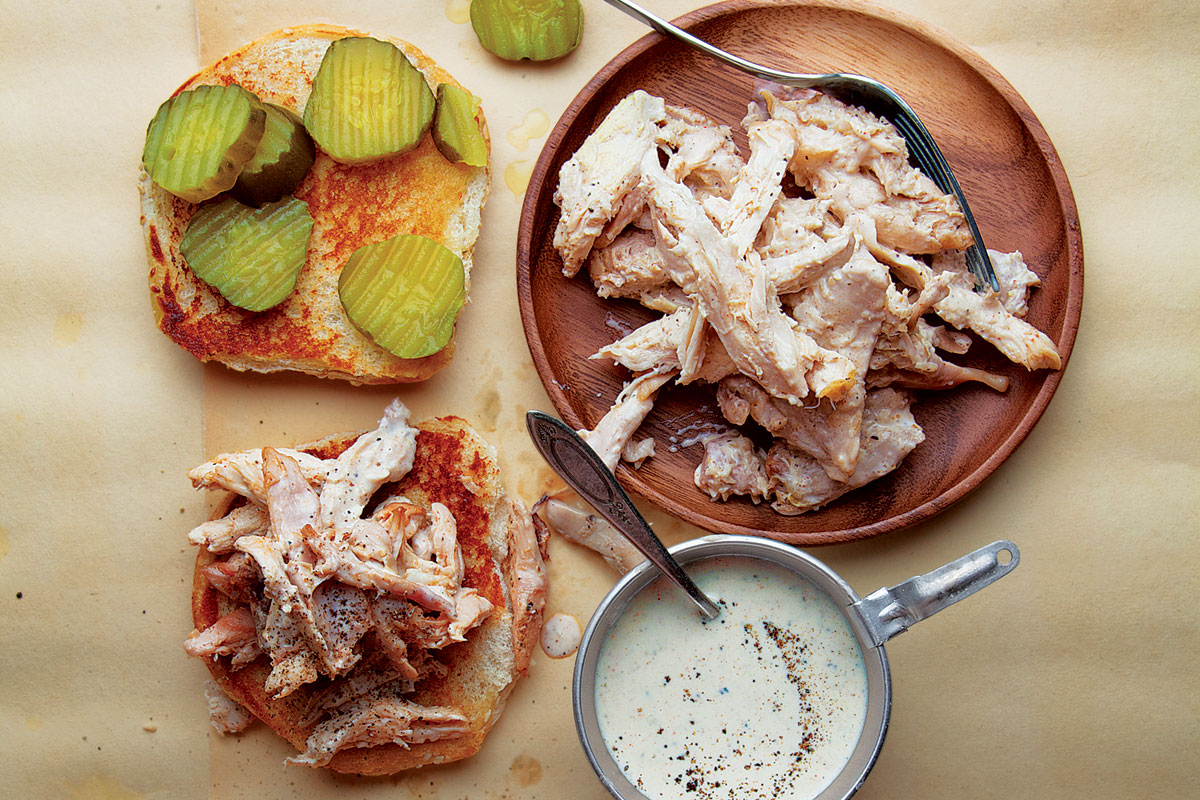
Big culinary news is Nashville Hot Chicken. Both SAVEUR and BON APPETIT did articles on it this month. A specialty of some down-home restaurants in the city, the blazingly spicy dish has branched out from Nashville and is now available in a number of places across the USA with franchise plans in the offing. HG doesn’t approve and doesn’t understand the fuss. Basically, this is a deep fried chicken dish with a few salient differences. The chicken is brined in buttermilk laced with Tabasco, rolled in flour and deep fried. Then comes the crazy part. Brown sugar, chile powder, garlic powder and–six to ten tablespoons of cayenne. (That’s a helluva lot of cayenne) are whisked into a cup of cooking oil and brushed over the pieces of fried yardbird. HG figures if you want to set fire to your mouth why go through all these steps. Just a mix a bottle of Tabasco with spoonfuls of cayenne and have at it. HG is a big fan of spicy food but draws the line at masochism. The French, of course, are severe classicists. Hate spicy food. That’s why Mexican, Indian, Thai, etc. food in Paris is so insipid. If a Parisian gets a whiff of cayenne, he signals his disapproval by making fanning motions at his mouth. HG will pass on these foul Nashville fowl and save the HG appetite for SJ’s newest passion: Alabama Chicken. Recipe, please, SJ.
Yummy Funny
June 2nd, 2014 § 0 comments § permalink
Yes, HG’s thoughts about food, dining, Paris, New York, Santa Fe, etc. may sometimes provoke a smile and, hopefully, even a modest grin. But, if you hanker for more robust fare, something that will provoke the eruption known as a belly laugh, get hold of the June 2, 2014 issue of The New Yorker. Turn to the “Shouts & Murmurs” on Page 35 and read Yummy by Paul Rudnick. This short piece on the goy-ification of Manischewitz, the gefilte fish and matzo company, is laugh out loud funny.
Michael Field: Forgotten Recipe Master
May 27th, 2014 § 1 comment § permalink
A good cookbook usually has many pages stained by spices and sauces. That’s because it is a book that is used, not a coffee table ornament. Michael Field’s Cooking School (published in 1965) was one of the first cookbooks acquired by HG/BSK and the duo has consulted it numerous times for better than 40 years. Michael Field’s recipes are foolproof. In the introduction to the book, Field makes it clear: “I cannot emphasize enough the need to follow these recipes precisely, especially the first few times you make them. Departures are all good and well providing you know exactly what it is you are departing from.” Last night, HG/BSK had two Colorado pals for dinner. BSK prepared a Field classic: Broiled Leg Of Lamb With Avgolemono Sauce. The leg is butterflied and marinated before broiling. The sauce is Greek in origin, lemony and invigorating, excellent over the lamb and even better over the steamed asparagus BSK served. The sauce is composed of egg yolks, lemon juice and chicken broth (plus a bit of arrowroot, cayenne and salt). Add more chicken broth and you’ve got a delicious soup (HG often had many bowls at the Pantheon Restaurant on Eighth Avenue in New York). Add rice, poached chicken and chopped parsley and you’ve a got a sumptuous dinner (precede it with a mezze of feta cheese, Kalamata olives and giant lima beans). Instead of chicken in the soup, try poached cod or other firm fleshed fish. Don’t see Avgolemono on many menus these days. A pity. As for Michael Field, he and his cookbooks seem to be forgotten. That’s a shame.
Why HG Never Got Very Rich
May 24th, 2014 § 0 comments § permalink
Hey, HG isn’t complaining.. HG has a wonderful life (with beloved BSK) in New Mexico and Prince Edward Island. Kids and their spouses (spice?) and the grandkids are an ongoing delight. But, HG’s thoughts occasionally turn to money as HG (with chagrin) notes various news items pertaining to the world oligarchy and the growing income disparity in the United States. Different attitudes toward money could be summed up in an incident that took place some 35 years ago. HG and zillionaire Alan G. were strolling in the Wall Street area of New York. HG had been spinning magical PR webs for the very rich guy who was engaged in a battle with the American Stock Exchange. The two guys watched an adroit African-American young man (and his shill) manipulating a lunchtime crowd with a three-card-monte game. Said HG: “What a shame. These are two bright, sharp young men. It’s a pity that legitimate business options haven’t been opened for these guys.” Said Alan G.: “Those weren’t my thoughts at all. I was trying to figure their hourly take from the hustle given the fact they would have to pay off some legitimate winners to keep the crowd interested. And, I was making a conjecture about an annual profit figuring in fines for illegitimate gambling plus payoffs to amenable cops. So, there’s a big difference in the way our minds work. You’re a talented guy, HG, and you’ll do okay. But, you’ll never get very rich.” And, that sums it up.
Wow! Kung Pao!
May 22nd, 2014 § 0 comments § permalink
BSK is a very proficient cook of certain types of Asian food, especially the fine art of stir-frying. The secret, says BSK, is speed and organization. Stir frying is a high heat proposition. Everything must be ready with all elements of a dish ready-to-go in separate bowls to be added to the wok in proper order. As sous-chef, HG does much preparation. Kung Pao chicken is a wonderfully spicy, flavorful dish. When served in a restaurant, Kung Pao is usually a mockery of Chinese cooking: Too sweet, sauce thick and gloppy and sometimes dyed a ferocious shade of red. BSK’s version avoids each and every one of those pitfalls — she uses only very modest amounts of sugar and corn starch and of course, no food dye. First, BSK cuts Chicken breasts into small pieces and marinates them in soy sauce, sugar, rice wine, corn starch and Szechuan peppercorns. Then BSK slices scallions, garlic, ginger and dried red chiles. When all the elements are in place, BSK works her magic with the sizzling wok, crowning the dish in its final moments with a sprinkling of roasted peanuts. A BSK masterpiece: food with crunch, spice, heat and flavor.
Death and Dosas
May 19th, 2014 § 0 comments § permalink
Saravana Bhavan is a remarkably successful chain of Indian vegetarian restaurants (33 in India and 47 in other countries) and is probably the only restaurant chain founded, owned and run by a convicted murderer. This unusual man is 66-year-old P. Rajagopal. He was convicted of murder, served one year in prison and then, inexplicably, was released. (The murder was a traditional case of older guy obsessed with a younger woman). When HG/BSK lived in Vancouver, HG became very fond of Indian vegetarian food. So, when Saravana Bhavan opened a branch in that city HG was an eager customer. Sad. The food was second rate. Vancouverites are very knowing about food so it was not surprising when the restaurant soon closed. A chastened HG returned to Chutney Villa in the city’s Mt. Pleasant neighborhood for his twice-a-week dose of dosa (thin, fried rice crepes); vada (lentil donuts) and idli (steamed riced cakes). These good things were dipped into sambar (spicy lentil soup) and a vegetable curry. This was accompanied by a variety of house made chutneys and cups of steaming chai. A very comforting lunch/brunch in scenic but rainy Vancouver. Chutney Villa is run by an attractive and welcoming woman. HG always received a warm hug upon his arrival. This is a lady who has never been convicted of anything but kindness.
HG Told You So!
May 17th, 2014 § 0 comments § permalink
Some time ago HG advised HG’s faithful followers that the only way to cook steak is the smoky, satisfying cast-iron-on-a-stovetop method. This involves heating a cast iron pan to the ultimate, sprinkling it with kosher salt and adding a well dried New York strip (or rib) steak and giving it a robust, crusty sear on both sides before turning down the heat. Well, in the New York Times Dining section today, Julia Moskin reiterates this advice (and illustrates it with a nice video). Moskin advises that after it is seared, the steak should be turned every 30 seconds. Crushed pepper should be added, she says, just before the steak nears readiness as pepper burns easily. Some HG counsel: If you like rare steak (anything else is a waste of good meat), take it off the heat while it is still very red in the interior. Let it rest for 5-10 minutes before slicing to let the meat’s juices re-circulate. During the “resting period,” it will continue cooking to the right saignant (as the French put it) point. The eccentric French (lovers of Jerry Lewis) like their steak “bleu”, not “saignant.” “Bleu” is raw beef with a modest sear. Enhance your steak with a pat of butter or top it the Tuscan way with a splash of fruity olive oil and crushed garlic. Pass that bottle of Cabernet Sauvignon down here, please.
Listen To The Rebbitsen
May 15th, 2014 § 0 comments § permalink
Okay. For those unacquainted with yiddish, the rebbitsen is the rabbi’s wife. Convinced that women were smarter than men, HG’s Mom often said: “Listen to the rebbitsen.” The presumption was that rabbis were lost in a haze of spiritual, legalistic and other “of the Book” concerns. Rebbitsens, on the other hand, were sound on earthly matters. A recent New York Times obituary of Omaha Rabbi Myer Kripke (died age 100) brought this to mind. Midwest synagogues did not lavish money on their spiritual leaders but Kripke, through inheritance and frugality, managed to accumulate about $65,000 in the early 1960s. Rabbi Kripke and his wife Dorothy, an author of religious books for children, became friends with another Omaha couple, Mr. and Mrs. Warren Buffet. Buffet was achieving a local reputation as an astute money manager. Dorothy Kripke suggested that they turn over their money to Buffet to manage. Kripke demurred. Buffet was only accepting investors who put up $150,000-$250,000. Dorothy (a traditional noodge) kept insisting that Kripke approach Buffet. It took three years but Kripke finally gave in. Buffet, who liked Kripke, made an exception and accepted the money. By the early 90’s that modest sum grew to $25,000,000. Didn’t change the Kripkes. They continued to live modestly and used their wealth for a variety of philanthropic causes. They were guests at the Buffets’ annual Thanksgiving dinners. Knowing their kosher dietary strictures, Mrs Buffet hired an eminent caterer to prepare tuna salads for the the Kripkes.