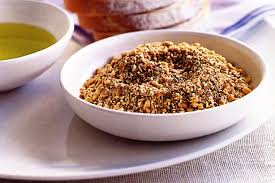
Yes, schmaltz, delectable chicken fat, is making a comeback. It’s in the news. The New York Times recently reported that restaurant chefs and knowing home cooks are using the magical ingredient to enhance a variety of dishes. While some cardiologists and health police deride the golden goodness of chicken fat others are proving that, yes indeed, Moms may have been right all along citing schmaltz’s high level of heart healthy mono-saturated fats. Well, chicken fat may not be as good for the body as kale, but it provides real solace for the soul. HG’s favorite after school snack was a slice of Stuhmer’s pumpernickel bread covered with a good quarter-inch of chicken fat, kosher salt and black pepper. (Sometimes, HG’s thoughtful Mom added a slice of raw onion). Thus fortified, little HG was ready for competitive street games of punchball and “association” football. (The street was a playground in the 30’s and wartime 40’s since automobiles were scarce). HG’s Dad’s favorite use of chicken fat was in the form of “grieven” (or “gribenehs”). These were crisp, salty, lush bits of rendered chicken skin. The late, beloved Hershele Zvi Freimann would accompany this treat with a slice of rye bread and a modest tumbler of Park & Tilford rye whiskey. HG has a fond memory of HG’s Mom’s chopped hard boiled eggs and onions mixed with plenty of schmaltz. Her “latkes” (potato pancakes) fried in chicken fat were superior. There was plenty of chicken fat in her chopped liver. This was accompanied by slices of pungent black radish, also liberally gilded with schmaltz. The Temple of Schmaltz is Sammy’s Romanian Restaurant on New York’s Lower East Side. There’s a pitcher of schmaltz on every table. There’s also a bottle of vodka encased in ice. So, be assured, a raucous, inebriated, nostalgic good time is to be had. A schmaltzy joint, indeed.
Waitpersons
January 20th, 2015 § 2 comments § permalink
Okay. Now that we strive for political correctness, there are only “waitpersons.” Farewell to “waiters” and “waitresses.” On the not-so-politically-correct side, HG has noticed that “waitpersons” in all cheap but delicious Chinese restaurants are unsmiling and peremptory. On the other hand, Latino “waitpersons” in New Mexico, whether serving in a white tablecloth restaurant or a rough hewn roadside truck, are gracious, smiling and efficient. Joyous welcoming shouts and farewells are traditional in Japanese businesses, restaurants included. Paris “waitpersons” are models of professionalism. They are not your pals. They do not announce: “Hello, I am Pierre, your waitperson for tonight.” They simply do their job and do it wonderfully — Of course they usually warm up to HG because HG expresses intense interest in every aspect of the carte and carte des vins. Waitpersons in Italy are the best. They enfold the diner, whether tourist or native, in family warmth. (Venice is an exception. Following a centuries old tradition, tourists are there for the fleecing. Tourists pay expanded prices. Venetians get a discount). Restaurateur Daughter Victoria F. makes sure service is a model of friendly efficiency at her three New York restaurants — Cookshop, Vic’s and Hundred Acres. (No, HG/BSK are not treated differently than any other diners). The old New York Jewish (must call them “waiters”) were the stuff of comedy legend. They staffed delicatessens, “dairy” restaurants and traditional kosher and non-kosher Eastern European eateries. They never smiled. Their feet hurt. They hated their customers. Even when in a nostalgic mood, HG doesn’t miss them.
Craig Claiborne Comfort
January 19th, 2015 § 0 comments § permalink
Grey skies. A light dusting of snow. Time for comfort food. And, what could be more comforting than meatloaf? Splendid for dinner. Wonderful for a luncheon sandwich. (HG likes it on ciabatta or rye with a slice of raw onion and Russian dressing). With all of this in mind, BSK snared the battered, stained, much-used “New York Times Cookbook” by Craig Claiborne. Published in 1961, this has been an HG/BSK perennial favorite. So, last night BSK consulted Claiborne’s recipe and gave it a few herbaceous, spicy tweaks of her own. Into the oven with the meatloaf for one hour and thirty minutes. Voila!! Accompanied by little potatoes and a saute of shitake and cremini mushrooms, this was American cooking at its best. Claiborne, who died in 2000, had a major positive influence on American cooking and dining. Appointed Food Editor of The New York Times in 1957, Claiborne made the food section a source of good, easy to follow recipes (often with the collaboration of French chef Pierre Franey). Claiborne expanded the repertoire of home cooks to include, Mexican, Asian, Russian and other international cuisines. He was also the Times restaurant critic and introduced the star rating system still in use today. In HG’s opinion, Claiborne had excellent restaurant judgment except when he dined at Jewish delicatessens or Chinese restaurants. Mississippi-bred Claiborne was blind in regards to these two cuisines — he loved them all indiscriminately. An overstuffed pastrami sandwich — no matter the quality (or lack thereof) — led him down the path of prose poetry.
The Obscenity Of Overpriced Food
January 18th, 2015 § 2 comments § permalink
The Japanese chef Masyoshi Takayama charges $450 a meal (before taxes, drinks and tip) at his restaurant Masa in New York’s Time-Life Center. This probably amounts to a total of $700-$800 (more or less) for luncheon for one. In HG’s view, this is self indulgence carried to an obscene length. The possible saving grace is that Masa serves meals of the rarest ingredients at their peak of freshness, prepared by artists of the Japanese kitchen who have undergone years of disciplined training. Still, no lunch for one can be worth 800 bucks. Sure, New York’s oligarchs can afford it but that doesn’t justify it. Now, Kappo Masa, another New York restaurant recently opened by Takayama (in association with art dealer/mogul Larry Gagosian), has moved pricing to a new height of vulgarity. It was the subject of an attack by New York Times restaurant critic Pete Wells (he gave it a no-star review.) Wells cited some prices: $240 for tuna maki sprinkled with caviar. $120 for fried rice with mushrooms and truffles. $150 for beef tataki. Service is offhand. Many of the dishes are poorly prepared, according to Wells. Jay Rayner, the restaurant critic of Britain’s Guardian newspaper, launched a similar attack at the loftily priced Dorchester Restaurant in London’s posh Dorchester Hotel. Says HG: It’s about time. Rayner is HG’s favorite food writer. His prose can be ferocious. Here’s what he has to say about super pricey, below par meals: “I have no problem spending big money on a meal out. It just needs to be utterly memorable, the stuff of recollections whispered breathily at night. It can’t be a pallid fart of mediocrity, priced for some dodgy clientele who have ripped off the gross national product of a small impoverished nation and is now domiciled in London for tax reasons,”
New Yorkers (Part Three: Bess Myerson)
January 17th, 2015 § 2 comments § permalink
Bess Myerson was crowned Miss America in 1945, the first (and only) Jewish woman to win this title. These days, the Miss America contest exists on the fringes of the national consciousness — a relic (thankfully) of a more sexist era that is quickly going out of style. But, in 1945 Miss America was a big deal and winning the title meant instant celebrity for Bess Myerson. Unfortunately, anti-semitism was prevalent in the United States at the time and three of the five Miss America sponsors withdrew their sponsorships when Myerson was crowned; in addition, her national “crowning” tour was met with blatant anti-Jewish hostility at stops all across the country. She overcame all of this and, before she died at 90 last month, led a colorful, tempestuous, productive, tragic life. During HG’s New York public relations career, HG encountered Myerson at many public events. She was New York City’s Commissioner of Consumer Affairs. Very tough. Very effective. Before that job, she was omnipresent as a star of television game shows. A gifted pianist, she appeared with a number of symphony orchestras. HG found her imposing. She was well over six feet in heels. Very beautiful. Statuesque. She thought beauty contests stupid (she only entered Miss America for the college tuition prize). Myerson studied at Hunter College in New York (and like BSK) graduated with honors. She didn’t like to be complimented about her looks. Not surprising. She grew up in the Sholem Aleichem Cooperative Housing Complex in The Bronx (not far from HG’s Kingsbridge neighborhood home). This was housing built by Workmen’s Circle (“Arbeiter Ring”), an organization devoted to socialism and the mission of keeping Yiddish culture alive. The cooperative was named after the famous Yiddish writer, Scholem Aleichem whose stories were the basis for Fiddler On The Roof. The occupants of Sholem Aleichem Housing Complex were Yiddish-speaking poets, artists, musicians and intellectuals forced to make a living as garment workers and artisans. Books, brains and art were what counted, not physical beauty. Bess Myerson (who was fluent in Yiddish) was esteemed in the community because of her piano musicianship, not her looks. (Marc Chagall, the Jewish/Russian/French painter lived at Sholom Aleichem for some months after fleeing the Nazis). Myerson was an icy lady but she softened considerably when HG greeted her with some Yiddish phrases. Beneath that cool exterior was a woman of volcanic passion and that led to The Bess Mess and great public humiliation: When she was Consumer Affairs Commissioner, she fell in love with Andy Capasso, a sewer contractor who did business with the city. He was married and much younger than Myerson. The doomed love affair lead to indictments and criminal prosecution (Myerson and her co-defendants were acquitted). Myerson retired from public life. Battled cancer and dementia before she died. Whether Miss America or ordinary citizen, the third act is always tough.
New Yorkers (Part Two: Allie Sherman)
January 15th, 2015 § 0 comments § permalink
In 1947, HG was an ineffective halfback on the City College of New York football team (by no means a gridiron powerhouse). One of HG’s heroes was the then quarterback of the Philadelphia Eagles, Allie Sherman. At the time, HG was five foot nine and weighed 165 pounds (Since then, HG has shrunk two inches in height and dramatically expanded around the middle). Sherman was five feet ten and weighed 168 pounds. So, in 1947, HG and Sherman were both about the same size. Both were Jewish, born of Russian immigrants. Sherman had played college football at Brooklyn College (also not a powerhouse but better than CCNY). That’s where all the comparisons ended. Sherman was a very effective short passer (couldn’t throw the long ball) and a superior strategist. He went on to become the coach of the New York Giants and lead them to three NFL titles. He hired Em Tunnell and Rosey Brown as assistant coaches—the first African-American coaches in the NFL. Sherman had a sophisticated understanding of professional sports and was prescient about the importance of television and the value of pay-per-view events. After coaching, he had a successful career in sports administration (marketing and overseeing the New York Cosmos Soccer team) and television. Later, he totally revamped New York’s OTB–Off Track Betting, and made it a financial success. Sherman died last week, age 91. The tradition of five foot ten inch Jewish pro football players continues with Julian Edelman of the New England Patriots. Edelman, a very muscular 200 pounds, is the son of a Jewish father and a non-Jewish mother. He was raised as a Christian but recently told the NFL Network TV Show that he considers himself Jewish. His Jewishness may be ambiguous but not his ability (unlike Sherman’s) to throw a long pass. He proved that with a long touchdown throw in the playoff game against the Baltimore Ravens. Mazel Tov (good luck) against the Colts, Julian.
New Yorkers ( Part One: Mario Cuomo)
January 14th, 2015 § 0 comments § permalink
Mario Cuomo, who died recently, was a three-term Governor of New York State. He was the greatest orator HG ever heard (Others might give the laurels to Martin Luther King. Both were majestic). The speech Mario Cuomo delivered to the Democratic convention in 1984 was a landmark in political oratory and as relevant today in 2015 as it was more than 30 years ago. In the speech Cuomo challenged the Republican vision of America as “a shining city on a hill.” Cuomo stressed the “hard truth” of another city—one of low pay, helplessness and fear. “A city where there are people who sleep in the city streets, in the gutter, where the glitter doesn’t show.” HG was always sad that Mario Cuomo never ran for the Presidency (even though his admirers continuously advised him to do so). Cuomo wanted Americans to embrace the idea that government could be a force for good. His obituary in The Economist Magazine put it well: “His alternative prescription to Republican frontier individualism which abandoned the poor, elderly and struggling to the side of the trail, was heartfelt Democratic liberalism, calling on Americans to become one community, exercise compassion and recognize that ‘at the heart of the matter we are bound one to another.’ ” Curiously, HG and Cuomo were opponents many decades ago in the Borough of Queens (then a highly contentious political arena, not the astoundingly multi-ethnic community it has become). HG, as public relations counsel to massive real estate interests, and Cuomo as a young lawyer making his first appearance in politics. Cuomo represented community groups in two communities–Corona and Forest Hills–who were battling real estate developers. In Corona, HG and his greedy clients, were demolished by Cuomo. HG shook Cuomo’s hand, expressed admiration and hoped that in the future they would be on the same side. Not to be. They were opponents again in Forest Hills. HG had learned a lesson. HG convinced his clients to accept Cuomo’s adroit compromise.
Peanut Butter: Not Just For Sandwiches
January 12th, 2015 § 0 comments § permalink
Most people think that peanut butter’s only function is as a companion to jelly in a kiddy sandwich. They are wrong. Peanut butter is one of the great cooking ingredients. It is used in many flavorful African soups and stews (Jambo Cafe , Santa Fe’s very good Afro-Caribbean restaurant, serves a coconut, peanut, chicken stew that is an HG favorite). It is the essential ingredient in many Indonesian and Malaysian dips and salads, often accompanying Satays (skewers of seasoned and grilled meat or chicken). When HG is confronted with left over roast chicken, as HG was last night, HG shreds the meat for a peanut buttery take on the Szechuan favorite, Dan Dan Noodles. HG learned to make it when HG/BSK (then West Side of New York residents) attended the cooking class of Karen Lee. To Karen’s delightful peanut sauce recipe HG added some finely chopped Szechuan preserved vegetables. Laid the shredded chicken on top of a platter of room temperature Chinese rice noodles. Mixed it all with the peanut butter sauce. Topped with sliced scallion and watercress leaves. Sriracha on table for added heat. Gorgeous Granddaughter Sofia (very hungry) returned to New Mexico from Christmas in Rhode Island. Joined HG/BSK in devouring the chicken and noodle dish. Not a smidgen left. Tonight, BSK will season and grill some thin pork cutlets. Serve them with some left over peanut butter sauce (for dipping) and a crisp green salad. Peanut butter rules.
A Classic BSK Dinner
January 11th, 2015 § 1 comment § permalink
BSK is, to put it simply, a master of chicken cooking. Chicken paillards (skinless, boneless chicken breasts, pounded thin, sautéed gently and served with a lemon-butter-capers sauce). Chicken curry (from the Vij’s cookbook). Chicken cooked with 40 cloves (!!) of garlic. Vietnamese chicken salad with lime juice, fish sauce, scallions, carrot shavings, chiles, etc. All of these dishes, and more, are part of BSK’s cluck-cluck repertoire. But, HG’s favorite is BSK’s roast “spatchcocked” chicken (spatchcocked being a flattened, whole chicken with the backbone removed). BSK marinates the bird in olive oil, garlic, lemon juice and herbs. Cooks it at 400 degrees for forty minutes. A bird from heaven. Crisp, golden skin and juicy meat. That’s what BSK served last night accompanied by sautéed, diced golden beets with onions; braised endive; tiny potatoes. Drank a super Charles and Charles Merlot blend from Washington State’s Walla Walla region. Hearty meal but HG still had some room for a finale of a Kozy Shack Chocolate Pudding (Sneer if you like — it leaves more of Kozy Shack’s Pudding and Flan for HG to enjoy!) and French VSOP Brandy laced with Peychaud’s Bitters.
Japanese Heaven
January 10th, 2015 § 1 comment § permalink
High in the hills above Santa Fe is a bit of Japanese heaven, Ten Thousand Waves. Offering lodging and a variety of spa services, this meticulously maintained, aesthetically superior resort is inspired by the Ryokans, the country inns in Japan where the knowing go for total relaxation, superior (and locally inspired) dining, cleansing and meditation. Some months ago, Ten Thousand Waves opened a restaurant–Izanami. It is a winner, a can’t miss New Mexico experience. On a snowy day, HG/BSK lunched there with Colorado pals—Margot and Dick Z. Distinguished folks. Margot has been a very important force in the preservation of wildlife and the scenic Colorado landscape. Dick has recently retired from a long and active career as a maxillofacial (relating to the jaws and face) surgeon. They are eminent collectors of Native American art (HG also recalls some extraordinary cacti in their mountain home). Margot not only collects art, she wears it. For lunch at Izanami, Margot arrived in an ankle-length coat fashioned from a beautiful Native American blanket. Lunch was a delight. Izanami, in terms of decor, adheres to the Japanese (and Mies van der Rohe’s) philosophy of “Less is more.” Exquisite lighting. The room is balanced to take advantage of mountain views and the surrounding evergreens. The restaurant is based on japanese Izakaya cuisine — small plates meant to complement beer, Shochu and sake — and the menu is divided into three categories–cold, hot and fried. Since the tapas are easy to share, HG/BSK and the Z’s tried lots of good things–a beet and persimmon salad; potato croquettes, aagedashi tofu, pork belly kakuni, grilled Japanese eggplant, pork tonkatsu. Pleasant, efficient service. BSK and the Z’s opted for a smoky and flavorful green tea. HG indulged the typical HG affection for alcohol with a carafe of chilled Ban Ryu sake. Superb.