During the 1950’s when HG was busy combining careers as a journalist and Broadway press agent, HG would often overindulge in strong drink. (BSK maintains this tendency has not wholly disappeared). The favorite boozing venue of HG and his raffish pals was Moe Dubiner’s bar/restaurant (long closed) on Stanton Street in the Lower East Side. When Moe shuttered his joint at 4 AM, the vodka and whiskey stoked group would often visit the nearby Second Avenue Russian Baths. Immigrant Jews believed in the health benefits of a good “shvitz” (sweat) so the Lower East Side had many bath houses but the Second Avenue was acknowledged as the best (the last remaining Bath House in the LES / East Village is Tenth Street’s Russian and Turkish Baths). HG followed a strict ritual at the Second Avenue. First, a visit to the Eucalyptus Room. Here, HG lounged in dry heat as herbaceous aromas wafted through the room. Then, a warm soapy shower. Into the Russian Room. Six rows of bleacher like marble seating. Hot steam. Macho guys like young HG sat on the very top row where the steam was blazing hot. Sweat poured off HG. Wandering through the room were the attendants/masseurs, hefty fellows clad only in jock strops. They carried bunches of birch branches. HG would beckon and an attendant would swing the branches through the air, sending a stream of hot air to a designated part of HG’s body. After being poached and losing pounds of water (vodka ?), HG would leap into the ice plunge. Yes, it was what it sounds like. A pool of ice cold water. Young HG managed to survive the shock to his system. Then, HG would stand against a wall (protecting his private parts) while an attendant directed a stream of warm water from a high pressure hose at every part of HG’s body. (Some older gentlemen oped for a “high colonic” or a “low colonic”, an internal cleansing. No details. You don’t want to know). HG would shower and then repeat the ritual: Dry heat, steam heat, ice plunge, high pressure hose, shower). The attendants also offered a “playtzeh”, a vigorous, painful massage. HG tried it once. Sheer masochism. After all the steaming and showering, HG picked up a cotton nightshirt and robe and slept a peaceful eight hours in the bath house dormitory. Awakened with an appetite like a ravenous beast. Fortunately, the Second Avenue served a hearty breakfast buffet: Many varieties of herring, smoked whitefish, boiled potatoes, sliced tomatoes and onions, sour cream, cream cheese, cottage cheese, rye bread, pumpernickel bread, bialys, bagels, onion rolls. Coffee. Tea. And, the thoughtful management provided a few bottles of brandy and chilled vodka. All of this took place in the era before bath houses became boy-meets-boy hangouts of the gay community. The Second Avenue was relentlessly heterosexual and ethnic. HG would leave the Second Avenue sober, rested, clear headed …and very, very clean.
“Where The Finest Jews Eat”
March 1st, 2015 § 2 comments § permalink
For many years that was the motto of Moskowitz & Lupowitz, a Romanian-Jewish restaurant on Second Avenue and Second Street in New York. It was a favorite of Groucho Marx, Milton Berle, Eddie Cantor, Sid Caesar and other theatrical luminaries. It was founded in 1909 by Romanian immigrants and for many years was owned and managed by Louis Anzelowitz until finally closing in 1966. It was one of HG’s favorite New York restaurants, offering a robust array of artery clogging traditional Eastern European Jewish dishes. (The loud Sammy’s Romanian on Chrystie Street is the last of the Romanian Jewish restaurants on the Lower East Side. Its menu is a pale shadow of the wonders once offered by M & L). When HG was a child M & L loomed large in HG’s imagination as he often heard their catchy jingle being sung by the Pincus Sisters on the Yiddish language radio station WEVD (named after socialist Eugene Victor Debs). M & L was the classiest Lower East Side restaurant with waiters in tuxedos and thickly carpeted floors. Despite the elegant atmosphere, it was never very expensive. In 1940 you could have a five course steak dinner for $1.35 (fruit juice, appetizer, soup, main dish, dessert). In 1962 you could have this meal for about $4.50. HG’s cardiologist would not have approved of HG’s typical M & L meal: Brains, sweetbreads, chicken livers or chopped liver with chicken fat and onions as an appetizer. This was followed by chicken soup with “kreplach” (meat filled dumplings). Main course was an M & L specialty: “Mushk” steak (rib steak) with “kasha varnishkes” (buckwheat groats with Farfalle pasta, fried onions and chicken fat.) Dessert was an afterthought: Stewed prunes (for digestive purposes). HG drank vodka with the appetizers, beer with the main course and Slivovitz (plum brandy) as a digestif. Plus Russian tea (strong black tea with a spoonful of cherry jam). HG often went to M & L with a stylish girl friend who ordered four appetizers as a meal (they had to be brought in succession by the waiter who grumbled as he made trips to the kitchen). The lady washed them down with Wild Turkey bourbon on the rocks. Pre-World War Two Lower East Side had many “Romanian broilings” restaurants. When little HG accompanied his father to that neighborhood to buy HG a winter outfit (heavy plaid mackinaw, corduroy knickers, cap with attached earmuffs) the two often would visit these joints to lunch on broiled “karnezelach” (beef, garlic and onion cigar-shaped hamburgers) with crisp “silver dollar” potatoes. At night, these places would transform and often featured a violinist playing Yiddish and Gypsy melodies. Italian mobsters and their Jewish gangland associates loved these rough and ready eateries. They were known as “Jew joints.” The bad guys never patronized Moskowitz & Lupowitx. Too classy. Too bourgeois. A “carpet” joint.
Scungilli
February 27th, 2015 § 0 comments § permalink
The dictionary defines scungilli as “a large marine whelk or conch eaten as food.” Yes, this was a protein–in the form of salad or mixed with pasta smothered in super-hot red sauce–that was served in many old fashioned New York Italian restaurants during HG’s youth. The sea creature was pronounced “skoonjeel” and was delicious. Scungilli mostly disappeared from Manhattan menus and soon could be found in only two restaurants in Little Italy–traditional Vincent’s and upstart Umberto’s. In HG’s opinion the best fiery scungilli pasta dishes were found in a tiny Italian joint in Chinatown (corner Mott and Pell). HG ate there with two rugged Goodfellas who solicited HG’s promotional advice on how to improve sales at their legitimate front –a Staten Island furniture store. (Of course, scungilli was always available in Brooklyn, the Corona and Howard Beach neighborhoods of Queens and in the beloved Belmont Tavern, Belleville, New Jersey). Scungilli had its big moment of fame when gangster Crazy Joe Gallo was murdered at Umberto’s Clam House on April 7, 1972. (Scungilli, presumably, was on the table when he met his end.) Crime analysts have wondered why Gallo was dining at Umberto’s rather than the more traditional Vincent’s. HG has a theory: Joe was sentimental and his father, also a gangster, was named “Umberto.” Recently, a hungrygerald.com follower informed HG that there’s a very good Italian scungilli restaurant in Vero Beach, Florida. HG will keep it in mind if he ever ventures into Jeb Bush territory.
Perfect London Days (and Nights)
February 25th, 2015 § 1 comment § permalink
In the early 1970’s, HG assisted the management of New York’s posh Hotel Pierre in solving a sticky public relations problem. The Pierre was part of the Forte international hotel group. This meant HG/BSK got a special rate when they stayed at Forte’s Brown’s Hotel in the Mayfair neighborhood of London. Brown’s was quiet and genteel. The rooms had no television or other of today’s electronic necessities. Furniture was vaguely art deco. Bathrooms were spacious with large tubs and powerful hot water showers. Comfy beds and sweet smelling sheets. The hotel’s chintz bedecked English Tea room was famous throughout London. HG/BSK breakfasted in their room. Poached eggs. Grilled tomatoes. Wheat toast. Marmalade. Pots of very good tea. Then off to a day of museums, galleries, shops and London architecture. Back to Brown’s for tea at four o’clock. Cucumber and watercress sandwiches. Scones with clotted cream and strawberry jam. Fruit cake. And, of course, superb freshly brewed tea. A brief rest and shower. Off to the theater. (The dollar and pound were in an attractive equilibrium in those days making London affordable). Apres theater HG/BSK dined at the glamorous Savoy Grill. Perfect smoked salmon sliced paper thin. Mixed grill with soufflĂ© potatoes. Their other choice was venerable Rule’s for smoked salmon, Welsh rarebit and vintage Port. At some point, Brown’s got a big time “luxury” modernization. Prices went up and the rooms lost some of their charm. HG/BSK switched to the Wilbraham Hotel near Sloane Square. Eccentric, shabby, genteel, comfortable. HG/BSK eliminated high cal afternoon tea and lunched at such wonderful venues as the Hotel Connaught Restaurant (certainly in its time the best and most beautiful restaurant in the world) and J. Sheekey’s, the seafood restaurant in the theater district. HG’s spot for lunch on a grey, rainy or chilly London day was The Gay Hussar on Greek Street in Soho. A cozy rectangular room bedecked with books, mirrors and political caricatures, The Gay Hussar is the favorite dining venue for Britain’s Labor Party and left wing journalists. While the Labor Party dignitaries may attack the rich in Parliament, they do not disdain rich food. The Hungarian food at The Gay Hussar is decidedly rich, flavorful and hearty. The Wilbraham Hotel allowed HG/BSK to stock their refrigerator with ham, roast beef, chutney and salads from a nearby delicatessen (“By Special Appointment to the Queen Mother”). Thus, HG/BSK had their after theater feast in their room. Drank very good French wines. Yes, those were perfect London days and nights. Can’t be repeated. London is not the same. The unique English flavor of the city has diminished and money crazed internationalism rules.
Mutton Chops
February 24th, 2015 § 0 comments § permalink
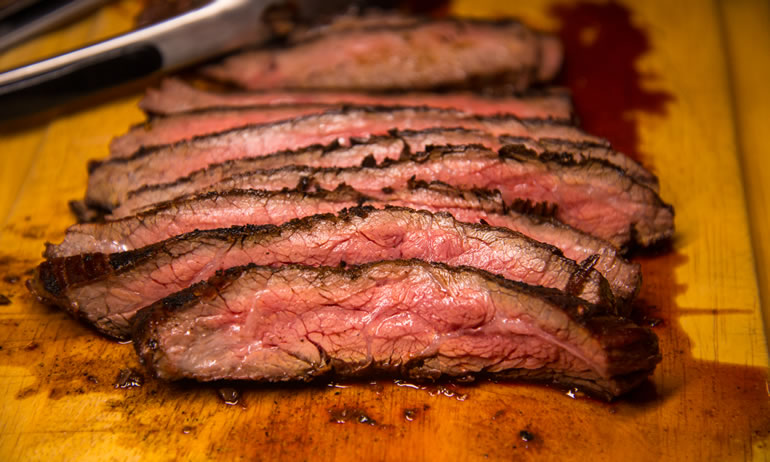
If you are a happy carnivore with a taste for robust red meat, there is nothing better than a big, rare mutton chop. Oddly, it is not a celebrated menu item in New York or Paris. (If you search, you can find mutton chops in London). In times past you could find mutton chops at two locations in New York: Keens Chophouse on W. 30th Street and at Gage & Tollner on Downtown Brooklyn’s Fulton Street. Gage & Tollner was founded in 1878 (closed in the 1990’s) and had a mellow antique interior with 38 gas lamps, wood paneling and mahogany tables. The mutton chop was medium in size and served with corn fritters sweetened with a bit of maple syrup. (The combination seemed unusual but it worked). Thankfully, Keens is still in business and their legendary mutton chop is still giant. Prices however are a different story: In keeping with present day oligarchy-influenced New York the chop now fetches $51.00. HG/BSK enjoyed Keens often when they lived on the Upper West Side during the 1960’s.(Prices were much more modest then). Once, during a Boston-type blizzard, HG/BSK ventured out at night, found an intrepid cab, and supped on Keens’ mutton chop, skillet sized golden hash browns and wine. Only two tables in the restaurant were occupied. Keens (founded in 1885) was not only a cold weather choice. On a blazing July day, HG/BSK shopped for baby furniture at Macy’s (baby daughter Lesley was due in August). HG and very pregnant BSK left summer heat behind and had an early dinner of roast beef, fiery horseradish and Yorkshire Pudding at Keens. The beautifully aged restaurant interior was cooled by very modern air conditioners. HG/BSK felt they were dining in late autumn London. Keens now charges $58.00 for its prime rib.
Viva Mexico
February 23rd, 2015 § 0 comments § permalink
In the early days of television (1954) HG and a colleague recently arrived in New York from California, wrote TV news programs that were broadcast nationally. The news was illustrated with still photos (they were called “telops”) which were transmitted by telephone wire to the TV stations (news film was introduced at a later date). HG and his pal were swift and nimble news writers and photo selectors. It was fun. International News Service, the Hearst wire service (later absorbed by United Press) was HG’s employer. INS was housed in the Daily Mirror building on E. 45th Street and HG usually lunched in the hole-in-the-wall Greek diner off the building’s lobby. But, knowing that his California buddy missed Mexican food, HG invited him to lunch at Manhattan’s only Mexican restaurant, Xochitl. A mistake. “This is a bad joke,” he declared in reference to both the food and the high price of lunch. In the 1960’s HG/BSK visited friends in California (their first trip to the state) and were determined to eat “real” Mexican food. Their friends (not foodies) took them to a nearby Taco Bell (then only in California). HG/BSK found it satisfactory but felt there was something missing. HG thought about all of this at a Sopaipilla Factory dinner last night (the eatery is in Pojoaque, New Mexico, a few minutes from HG/BSK’s home). HG/BSK and their visiting eight-year-old grandson, Haru, feasted on menudo, enchiladas, green and red chile of a quality simply unimaginable to a New Yorker of the 1960s. Not so to present-day New Yorkers like grandson Haru, who knocked off a bunch of chicken tacos declaring them to be “awesome” with the caveat that, as a Brooklyn guy who regularly dines in Sunset Park (a Mexican neighborhood near his home), he has devoured many an authentic taco. In fact New York is having such a Mexican food renaissance (with both high end and low down options) that HG’s Californian pal would probably find much to smile about. As part of this renaissance, HG is looking forward to next month’s opening of Rosie’s, Restaurateur Daughter Victoria’s next New York restaurant. This will feature farm-to-table Mexican cooking. (Husband/chef Marc Meyer has just returned from a two-week visit in Mexico with Diane Kennedy, the ultimate authority on Mexican cuisine). Meanwhile, HG will be off to nearby El Parasol to give visiting Haru another taco fix.
The Evolution of Japanese Dining In New York
February 21st, 2015 § 3 comments § permalink
The first time HG ever dined in a Japanese restaurant was in 1958. The restaurant was Suehiro, a tiny room near Columbia University. It was one of two Japanese restaurants in New York (the other was in the East 20’s). There were no sushi or ramen eateries in this very cosmopolitan city. HG’s Suehiro meal consisted of miso soup (with some tiny cubes of tofu), beef sukiyaki cooked table side in an electric pan by a kimono clad waitperson. Sliced orange for dessert. A pot of hot green tea. The check was laughably small and the satisfaction was great. HG was hooked. Never tasted sushi until the 1960’s when the first sushi bar opened in the West 40’s. First taste didn’t impress. But, subsequent visits made HG a raw fish convert. Now, of course, New York has scores of Japanese restaurants specializing in everything from fried chicken to curry to traditional Japanese pub food. The choices for sushi and ramen are limitless — from small dive joints to $800 omakase feasts at one of the city’s most exclusive sushi emporiums. HG is bemused at the fact that Japanese restaurants now vastly outnumber Jewish delicatessens (there are less than ten) in Manhattan. HG/BSK delighted in the food they consumed in Tokyo and Osaka (HG/BSK were in Japan some ten years ago for the marriage of SJ and Exquisite Maiko). SJ and EM guided HG/BSK through the vast food markets in the two cities. There were visits to a delightful sake bar and stops for grilled chicken and pork, fried balls of chopped octopus and much more. Slurped a lot of memorable ramen. One of the benefits of having a Japanese daughter-in-law (besides her production with assistance of SJ of Haru and Teru, HG/BSK’s wonderful grandkids) is cuisine. EM is HG/BSK’s favorite cook. As HG has noted in many posts, EM produces the world’s best tempura, robust stews and soups and life enhancing seafood. Her meals at SJ/EM’s Brooklyn home or in the family Prince Edward Island ocean front paradise are among life’s most joyous occasions.
Smoky Fish Chowder
February 19th, 2015 § 3 comments § permalink
There are few things more warming and comforting on a cold winter night than a big, steaming bowl of smoky fish chowder. The temperature dipped downward last night. There was a light dusting of snow. Logs blazed in the fireplace. Yo Yo Ma’s musical magic (some unaccompanied Bach cello compositions) poured out of the Bose. Candles flickered on the table. And, of course, to make this tableau of New Mexico winter magic complete, there was smoky fish chowder. Here’s how BSK makes the dish. Thick slices of peppered bacon are fried until crisp. Removed. Some bacon fat is left in the pan and butter is added. Chopped onions are cooked until softened. Dusted with hot, smoked Spanish paprika. White wine goes into the pan, whole milk, a sprig of thyme and chunks of Yukon Gold potatoes — all to be enveloped in the folds of some nice fish stock. Cooked until potatoes soften. At that moment, BSK tosses in two dozen scrubbed little neck clams in their shells. As they begin to open, a pound of Icelandic cod is added and cooked for about four minutes. The thyme is removed, crisp bits of bacon are sprinkled over the dish. Some pats of butter are popped in to add golden tones. Saltine crackers and a bottle of red Rioja complete the meal. The result is warm contentment.
Eat Your Vegetables!
February 17th, 2015 § 0 comments § permalink
Yes, that’s been the strident order of Moms for generations. Rebellious little HG bypassed vegetables (except for hidden treasures — little mounds of buttery mashed potatoes enclosing spinach). These days, because of BSK’s wizardry, HG is a vegetable lover. Here are some BSK specialties: Haricot verts cooked to the nice midpoint between Paris bistro soggy and health addict raw. Snow pea pods stir fried with ginger and garlic. Fried chopped zucchini and peppers plus corn kernels (best accompaniment for Adobo dusted pan fried pork chops). Thanksgiving-style roast brussels sprouts with chestnuts. This is just a sampling. BSK outdid herself last week with two surprising vegetable dishes. BSK followed Sam Sifton’s New York Times recipe for rotisserie-style Greek chicken (BSK showered the crispy chicken slices with feta cheese, kalamata olives and chopped parsley). The surprise was in the salad which augmented the chicken. Inspired by the Ottolenghi cookbook, “Jerusalem,” BSK roasted olive oil gilded cauliflower nuggets. Mixed them with chopped celery, pomegranate seeds and walnuts. Dressed them with a mix of olive oil, lemon juice, cinnamon and maple syrup (that’s right, maple syrup). A wow. This was followed by a dessert of nut brownies slicked with peanut butter icing prepared by dinner guest Karen K., neighbor, movie producer and New Mexico Dessert Queen. BSK’s next triumph was based on brussels sprouts. (BSK long ago banished HG’s antipathy toward “fairy cabbages”). BSK sautĂ©ed quartered sprouts in olive oil with garlic and thin shallot slices. Added chicken stock and cooked until the sprouts were barely tender. Tossed in some almost done penne. Continued cooking a few more minutes. When done, BSK added a goodly amount of parmesan, shredded sage leaves and a generous half pound of crisply fried thick cut preservative free bacon. A shower of Aleppo pepper. The result: A supreme pasta dish.
Breakfast Renaissance
February 16th, 2015 § 0 comments § permalink
For scores of years HG’s very unhealthy breakfast consisted of endless cups of black coffee and numerous Marlboro cigarettes, all consumed while reading The New York Times (HG’s morning hands were always stained by Times print). Much has changed. HG now reads The New York Times online. No cigarettes. Cafe latte. And, nourishing, often very hearty, breakfast meals. Most often HG has a big bowl of fresh fruit and Greek yogurt drizzled with plenty of Turkish honey (this is one occasion where the Greek and Turkish cultures are in harmony). The other perpetual is organic coarsely cut oatmeal (BSK adds lots of dried fruit to the cereal). For some reason, Sunday morning is a time for eggs. BSK is an exert poacher and scrambler. Thus, there are poached eggs on buttered Thomas English Muffins. Or, poached eggs on a bed of Geechie Boy Stone Ground Grits (provided by SJ). Crisp rashers of bacon always accompany these dishes. HG is very fond of soft, voluptuous scrambled eggs with Alaskan red caviar and creme fraiche. BSK makes this perfectly; however, it is in the realm of omelets that BSK demonstrates her true mastery. Here are some of the fillings: Cheese, fried onions, asparagus, mushrooms, mixed chopped herbs, spinach…and, surprisingly, super spicy Korean kimchee. A BSK omelette is always lightly browned on the outside. Creamy on the inside. Perfect. (SJ also does great omelettes. Must be an inherited talent). When HG goes out for breakfast he consumes a cheese enchilada topped with a sunny side fried egg and smothered in spicy red and mellow green chile sauce (In New Mexico this topping is called “Christmas.”) Best source for this dish is Sopaipilla Factory in Pojoauque (15 minute drive north of Santa Fe). When HG is really hungry in the AM, HG goes to Tune Up Cafe in Santa Fe for the eatery’s massive breakfast burrito filled with eggs, potatoes and thick cut bacon. There’s a ton of fiery green chile on the plate but HG always asks for more. HG may express some nostalgia for the past, but breakfast has never been better than the present.